
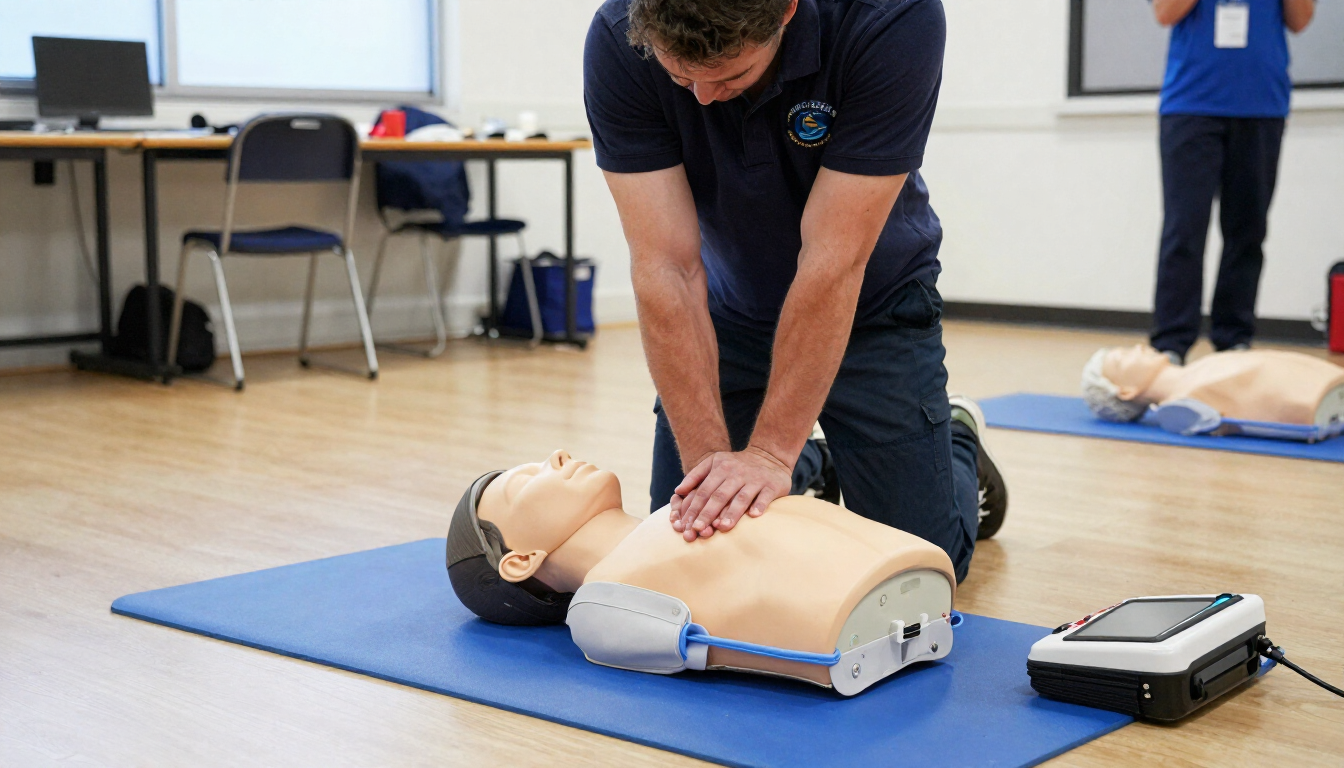
Cardiac arrest can happen anywhere, at any time. In Australia, a sudden cardiac arrest occurs outside of hospital in thousands of people each year, and every minute without CPR reduces the chance of survival. The good news is that bystander CPR — even hands-only CPR — can double or triple a casualty’s chances of survival.
This guide walks through the basic steps of performing CPR on an adult, in line with the Australian Resuscitation Council (ARC) guidelines. It is general information, not a substitute for accredited training.
What Is CPR and Why Does It Matter?
CPR (cardiopulmonary resuscitation) combines chest compressions and rescue breaths to keep oxygenated blood flowing to the brain and vital organs when a person’s heart has stopped. Without intervention, brain damage can begin within minutes. Early CPR buys precious time until an ambulance arrives.
The DRSABCD Action Plan
Before starting compressions, follow the DRSABCD action plan to stay safe and respond effectively.
D — Danger
Check for hazards to yourself, the casualty and any bystanders — traffic, electricity, fire or water. Only approach when it is safe to do so.
R — Response
Check for a response by calling the casualty’s name and squeezing their shoulders. If there is no response, they are unconscious.
S — Send for Help
Call 000 for an ambulance, or ask a bystander to call. If you are alone, call 000 before starting CPR.
A — Airway
Open the airway by tilting the head back and lifting the chin. If there is foreign material in the mouth, roll the casualty onto their side and clear it.
B — Breathing
Check for normal breathing for no more than 10 seconds. Agonal gasps are not normal breathing. If the casualty is not breathing normally, start CPR.
Step-by-Step: Performing Chest Compressions
1. Position Your Hands
Place the heel of one hand in the centre of the casualty’s chest (the lower half of the breastbone). Place your other hand on top and interlock your fingers.
2. Push Down Hard and Fast
Compress the chest about one third of its depth — roughly 5cm for an adult — at a rate of 100 to 120 compressions per minute. Let the chest fully recoil between each compression.
3. Give Rescue Breaths
After 30 compressions, give 2 rescue breaths. Tilt the head back, lift the chin, pinch the nose, and blow into the mouth for about 1 second, watching for chest rise. If you are not trained in rescue breaths, continue hands-only compressions.
4. Continue Until Help Arrives
Keep going at a ratio of 30 compressions to 2 breaths. Do not stop unless the casualty starts breathing normally, a defibrillator arrives, or emergency services take over.
Using an AED
An automated external defibrillator (AED) delivers an electric shock to restart the heart. AEDs are designed for public use and give clear voice instructions. Turn it on as soon as it arrives, follow the prompts, and resume CPR immediately after a shock if advised.
Get Hands-On Practice
Reading about CPR is a great start, but nothing replaces hands-on practice with a qualified trainer. In our accredited CPR course you will practise on adult and infant manikins, learn to use an AED, and build the confidence to act in a real emergency.